ServicesCommercial Roofing
Commercial Roofing in Grand Prairie
We install and maintain low-slope roof systems for offices, shops, churches and small retail buildings. The same small crew walks your roof, writes the estimate, does the work and cleans up, so you deal with people who already know the building.
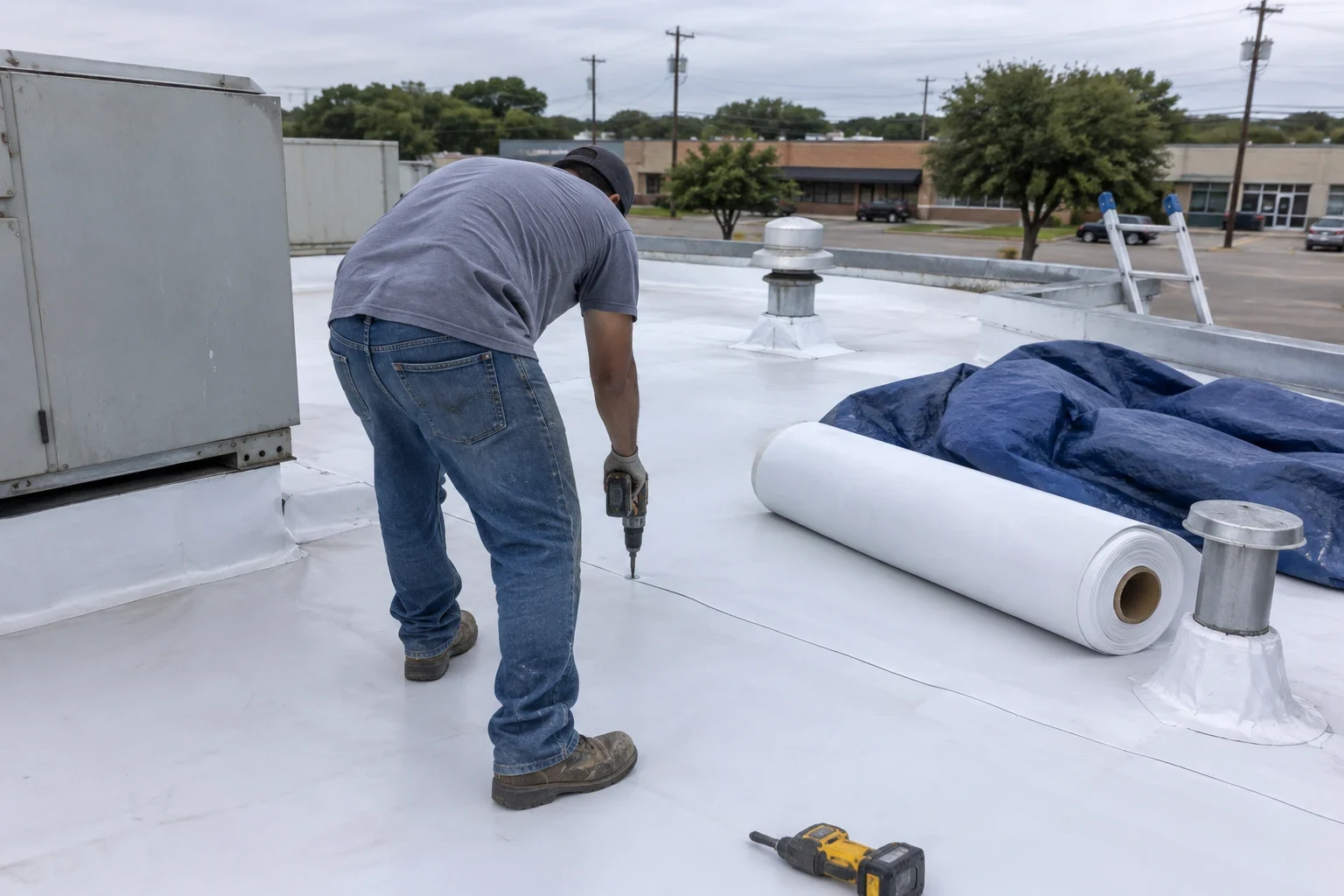
Roofing for buildings that need to stay open
A commercial roof is a different animal from a pitched shingle roof. Most are low-slope or flat, covered with a membrane such as TPO or modified bitumen, and they depend on clean drainage, sound flashing at every curb and wall, and seams that stay bonded through years of heat. When one of those details slips, water travels under the membrane and shows up somewhere far from where it got in.
Our team stays small by choice. Whoever first climbs up to study your roof also plans the job and is up there working while it gets done. You have one contact from start to finish, and no new face has to learn your building partway through.
Our company is licensed and insured, with 10 years of experience behind the work. If you also own a house that needs attention, our residential roofing page covers that side of what we do.
What our commercial roofing work covers
Single-ply membrane systems
We install TPO membranes with heat-welded seams. White TPO reflects a good share of summer sun, which can ease the load on rooftop units.
Modified bitumen
For roofs with heavy foot traffic or lots of penetrations, a multi-ply modified bitumen system holds up well. We match the system to how the roof actually gets used.
Roof coatings
When the existing membrane is still sound, a silicone or acrylic coating can add years of service without a full tear-off. We will tell you plainly if your roof is a candidate or not.
Flashing, curbs and penetrations
Most leaks start at the edges: HVAC curbs, vent pipes, parapet walls and skylights. We detail these by hand and seal them to the membrane manufacturer's specifications.
Drains, scuppers and edge metal
Standing water shortens the life of any low-slope roof. We clear and set drains, rework scuppers and finish the perimeter with edge metal sized for the job.
Signs your commercial roof needs attention
Water that sits for days
Ponding that lingers two days or more after rain points to sagging decking, blocked drains or a slope problem. It also adds weight the structure was not built to carry for long.
Ceiling stains with no obvious source
On a flat roof, water can travel several feet before it drips. A stain over the break room may start at a curb near the back wall.
Blisters, bubbles or open seams
Blisters mean moisture or air trapped under the membrane. Seams that lift at the edges let water in every time it rains.
Cracked or shrinking membrane
Years of hard sun dry out older membranes until they crack or pull away from walls and edges. Once that starts, it spreads.
Rising cooling bills
Wet insulation under the roof stops doing its job. If the building feels harder to cool, the roof is worth a closer look.
The steps of a commercial roofing job
- 1
A roof walk together
We check the membrane, seams, flashing and drainage and photograph what we see. Every picture we take is shared with you.
- 2
An itemized estimate in writing
We spell out materials, scope and anything we found below the surface where we could look. If a coating is enough, we tell you that before proposing bigger work.
- 3
A schedule built around your business
We arrange work hours, deliveries and staging so customers and tenants can still reach the entrance. When the job needs a permit, we take care of that too.
- 4
One crew up top each day
Whoever starts your roof finishes it. We guard entrances, keep debris in check and close up the roof every evening so it stays dry through the night.
- 5
Cleanup and a last look
We sweep the site and drag a magnet across the lot for loose fasteners. Then we climb up with you to check the seams and edges of the new roof before calling the job finished.
What shapes the cost of a commercial roof
We price each building separately, since a roof's square footage tells only part of the story. Your estimate is free, and we walk you through every line so you can see where the money goes and why.
- Square footage and layout
- Larger roofs cost more overall, but a roof broken up by parapets, level changes and many rooftop units takes more labor per square foot than a simple open deck.
- System and material
- TPO, modified bitumen and coatings carry different material and labor costs. Membrane thickness and insulation value also move the number.
- What is under the surface
- Wet insulation or damaged decking has to come out before anything new goes down. We check where we can before the estimate and photograph anything we find once work starts.
- Access and scheduling
- Tight lots, tall walls or work limited to off hours add time. Permit requirements also factor into the total.
Commercial roofing questions we hear often
Something not covered here? (972) 362-4112
Can my business stay open while you work?
Usually it can. We set up our materials well clear of the doors your customers use, hold the loudest work to hours we agree on with you, and give you notice before anything that could affect the rooms below. We sort out those details while preparing the estimate.
Do I need a full tear-off, or can you coat the existing roof?
It depends on how much moisture is in the roof and how sound the membrane is. If the existing system is mostly dry and intact, a coating is often the sensible choice. If it is saturated, a coating only traps the problem, and we will tell you that.
Which roof system is right for my building?
TPO suits many open, low-traffic roofs and reflects summer heat well. Modified bitumen handles foot traffic and lots of penetrations better. We recommend based on your roof, its use and your plans for the building.
Do you work outside Grand Prairie?
Yes. We take on commercial roofing in nearby cities such as Arlington, Irving and Mansfield. The same crew travels to the job, so the way we work stays the same.
How long does a commercial roofing job take?
A coating on a small building may take a few days. A new membrane system on a larger roof can run longer, depending on size, weather and what turns up underneath. We give you a working timeline with the estimate and keep you posted if it changes.
Let us take a look at your building's roof
We will walk the roof, show you the photos and put the options in writing. If you also have interior work planned, our commercial contracting page covers that as well.