ServicesResidential Roofing
Residential Roofing in Grand Prairie
We install complete roofing systems on homes, from the deck up. The people who measure your roof are the ones who lay it, flash it and clean up afterward, so the details you discussed at the start are still in hand on the last day.
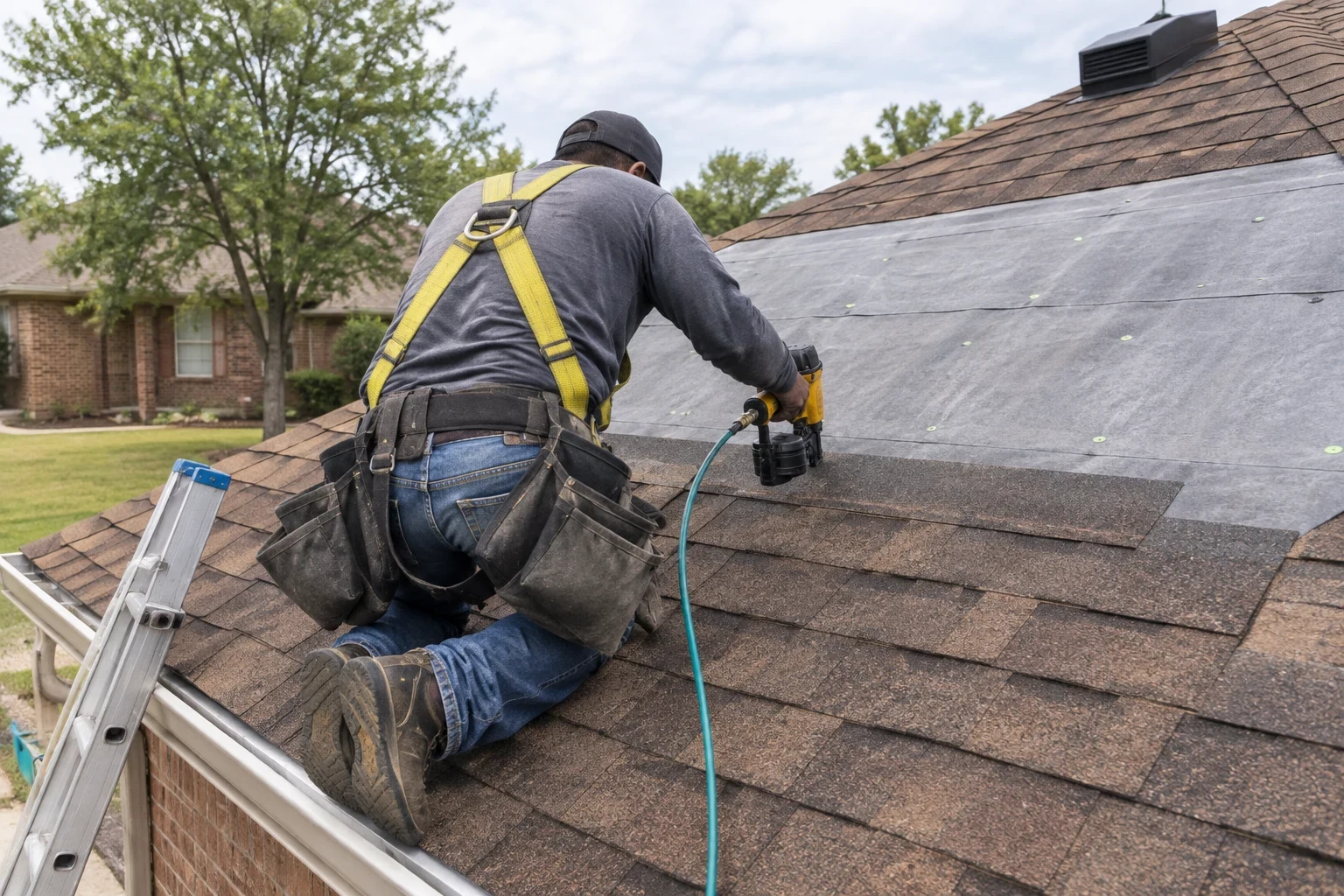
A full roofing system, put together with care
A roof is more than its shingles. Underlayment, drip edge, flashing at every wall and chimney, valley treatment and attic ventilation all decide how long the finished surface lasts and how it looks from the street. We treat each layer as part of one system rather than a pile of separate parts.
Our crew is deliberately small. The people who measure your roof stay with it through the final walkthrough, so no detail slips between handoffs and you always know who is working on your home. We bring 10 years of experience to residential roofing, and the business is licensed and insured.
Long Texas summers bake a roof from above while attic heat works on it from below. For that reason we give ventilation close attention and choose materials rated for sustained heat.
What your roofing project includes
Careful tear-off
We strip the old roofing down to the deck and look over every sheet before anything new goes on. Tarps protect your landscaping, and debris goes straight into a trailer or dumpster.
Decking check
Soft or delaminated decking gets pointed out and photographed before we touch it. You see what we found and decide with us how to handle it.
Underlayment and ice-and-water barrier
Synthetic underlayment across the field, with a self-adhered barrier in valleys and around penetrations where water collects.
Flashing done by hand
Step flashing at sidewalls, counterflashing at chimneys and new pipe boots. These spots are where roofs most often fail, so we do not rush them.
Ventilation balanced to your attic
We match intake at the eaves to exhaust at the ridge so heat and moisture can leave the attic, which helps the shingles and your cooling bills.
Finish and cleanup
Straight courses, clean ridge lines and tidy edges. We run magnets over the yard and driveway for stray nails before we leave.
Signs it may be time for a new roof
Granules in the downspouts
Shingles lose their protective granules as they age. Heavy granule wash and bare, shiny patches mean the asphalt is now exposed to direct sun.
Shingles lifting at the edges
Once corners start to curl or the middle cups inward, a shingle can no longer lie flat and seal. Wind then slips underneath with ease.
Stains on the ceiling or in the attic
Water marks on the decking or a ceiling show that something above is letting moisture through.
A roof nearing the end of its life
Summer heat wears many asphalt roofs out sooner than their rating suggests. If yours is older and showing wear, talking it over now is calmer than waiting for a problem.
A hot, stuffy attic
Poor ventilation shortens shingle life and raises cooling costs. A new roofing system is the right time to fix it.
How a roofing job runs with us
- 1
A phone call
You tell us about your home and anything you have noticed. We pick a time to come out for your free estimate.
- 2
The estimate visit
We measure the roof, look in the attic and take photos. Then we sit down with you to go over materials, colors and ventilation.
- 3
A written, line-item estimate
You receive a clear breakdown of materials and labor, along with how we will handle any soft decking. We take care of the permit when the city requires one.
- 4
Install day
Most homes take one to three days depending on size and weather. The same crew shows up each morning, protects the property and carries the work from tear-off to ridge cap.
- 5
Final look together
Before we leave, we go over the new roof and the grounds with you and answer any questions. The yard and driveway are left clean.
What goes into the price of your roof
No two houses measure or wear the same, so we price each roof by itself. The written estimate breaks out materials and labor on separate lines. If something hidden shows up during tear-off, you get photos and a conversation before any extra work is done.
- Roof size and pitch
- The area of the roof sets how much material we buy and how many labor hours go in. Steeper roofs need harnesses and more staging, and the work moves slower once the crew is tied off.
- The material you pick
- Architectural shingles, impact-rated shingles and metal panels vary in price, life span and look. We lay out the differences in plain words so you can choose what suits your house and budget.
- Old layers and decking
- Tearing off more than one existing layer takes longer. Soft decking under the old roof means added material and labor.
- How cut up the roof is
- Every valley, dormer, skylight and chimney needs hand-fitted flashing, so a roof with many of them takes more labor than a plain gable.
Common questions about home roofing
Something not covered here? (972) 362-4112
Do the same people work on my roof from start to end?
They do. We run a small crew, and whoever meets you for the estimate is up on your roof through the last walkthrough. No new team takes over midway.
How long will the work affect my home?
Most houses take one to three working days, depending on the size of the roof and the weather. You can stay home the whole time. Tear-off makes the most noise, and we clear the driveway and walkways as well as we can each evening.
What roofing material should I choose?
It comes down to your house, your budget and how many years you expect to live there. Architectural shingles fit most homes, and impact-rated shingles and metal last longer through rough weather. We explain each option plainly and leave the decision to you.
How will you keep my yard and driveway safe?
Before tear-off starts, we lay tarps over plants and walkways, and old roofing goes into a trailer or dumpster instead of onto the grass. Each day ends with a magnet sweep of the yard for loose nails.
Who takes care of the permit?
We handle it. If the city requires a roofing permit, we apply and schedule any inspection it needs, so the paperwork stays off your plate.
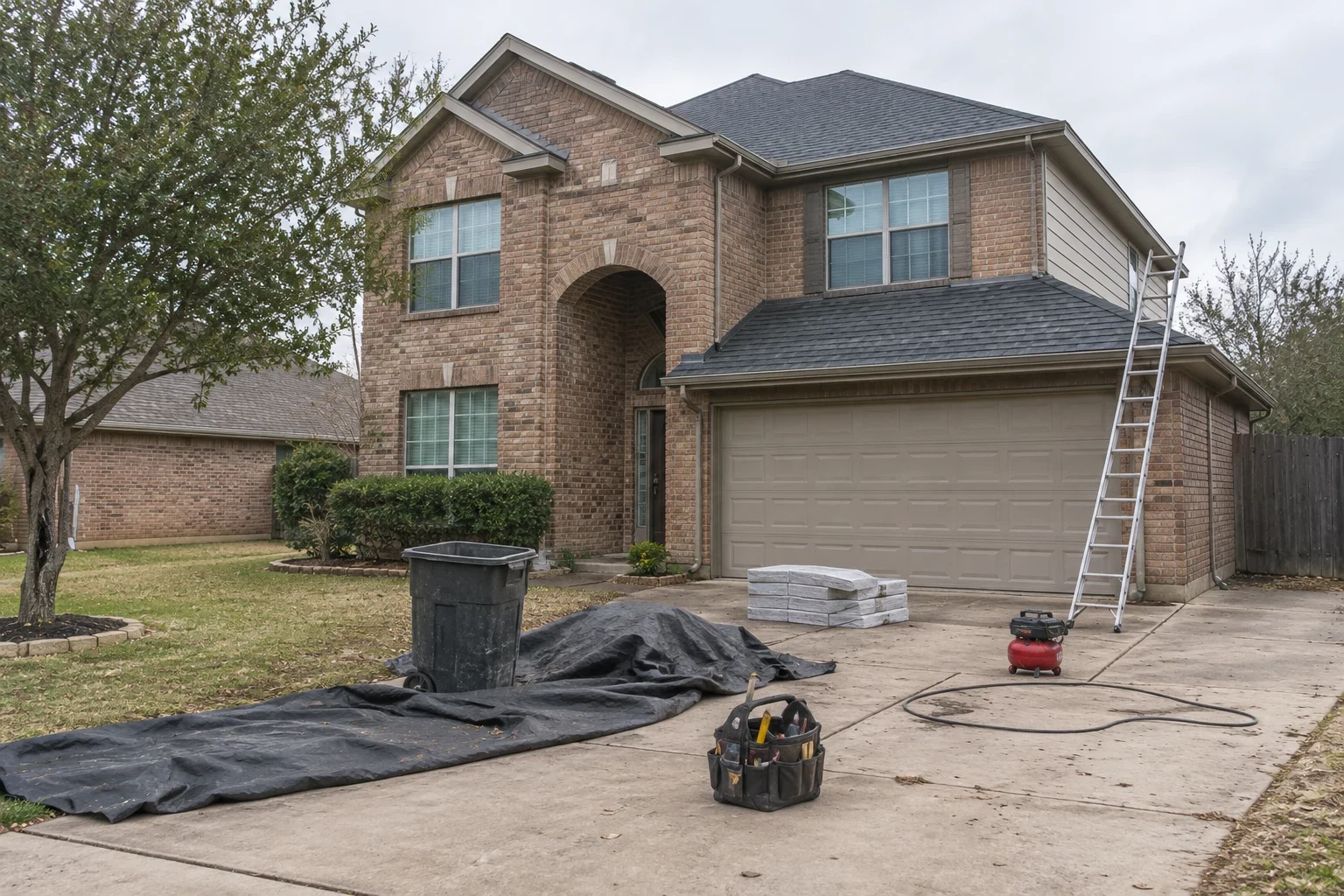
Talk through your roof with the crew who will build it
Give us a call and we will set a time to measure your roof and walk through materials with you. We work across Grand Prairie and nearby towns including Arlington and Mansfield.